
"Yesterday, December 7, 1941, a date which will live in infamy, the United States of America was suddenly and deliberately attacked by naval and air forces of the Empire of Japan." - President Franklin Delano Roosevelt addressing a joint session of Congress on December 8, 1941.
Those who lived in close proximity to that infamous date have vivid recollections of the Japanese attack on Pearl Harbor. More contemporary generations leading to the present day do not. That's unfortunate. It is each proceeding generation's responsibility to perpetuate history and culture to the previous generations. Although there were attempts via the classrooms, film and TV, even here at home we have neglected to preserve a detailed and fact-based legacy of December 7 appropriate for perpetuity.
There are exceptions.
I will cite The Pearl Harbor National Memorial, The USS Arizona Memorial, The Battleship USS Missouri, The Pearl Harbor Aviation Museum and numerous other sites that preserve and present our remarkable role in history in arguably the most globally impactful event in history.
The question is, when is the last time you paid a visit?
When is the last time you shared these experiences with your family, especially with your children?
When is the last time you reflected upon and shared this vital history with others? With yourself?
This is not a criticism, but it is a reminder of the wealth of history ensconced in our collective communities, and we should all become educated on this history because this is our home.
Along these lines there was one glaring component of World War II that virtually everybody was aware of — concentration camps.
A simple mentioning of centers of such barbarism, brutality and violation makes one cringe. The documented prejudicial rounding up of men, women and children because of their faith was as despicable as could be. Further documentation proved that these innocents were housed in Nazi concentration camps and subjected to such atrocities that their virtually inevitable deaths seemed welcome. This was the manifestation of true evil.
The invocation of Auschwitz, Treblinka, Belzec, and other concentration camps elicit understandable outrage and shame. However, WWII was rife with actions of great exploitation and violations. Seizure of land, properties, belongings, assets, irreplaceable heirlooms and basic rights and freedoms unfortunately had a permeating presence.
Did you know that we were infected with grievous violations here at home?
One word.
Honouliuli.
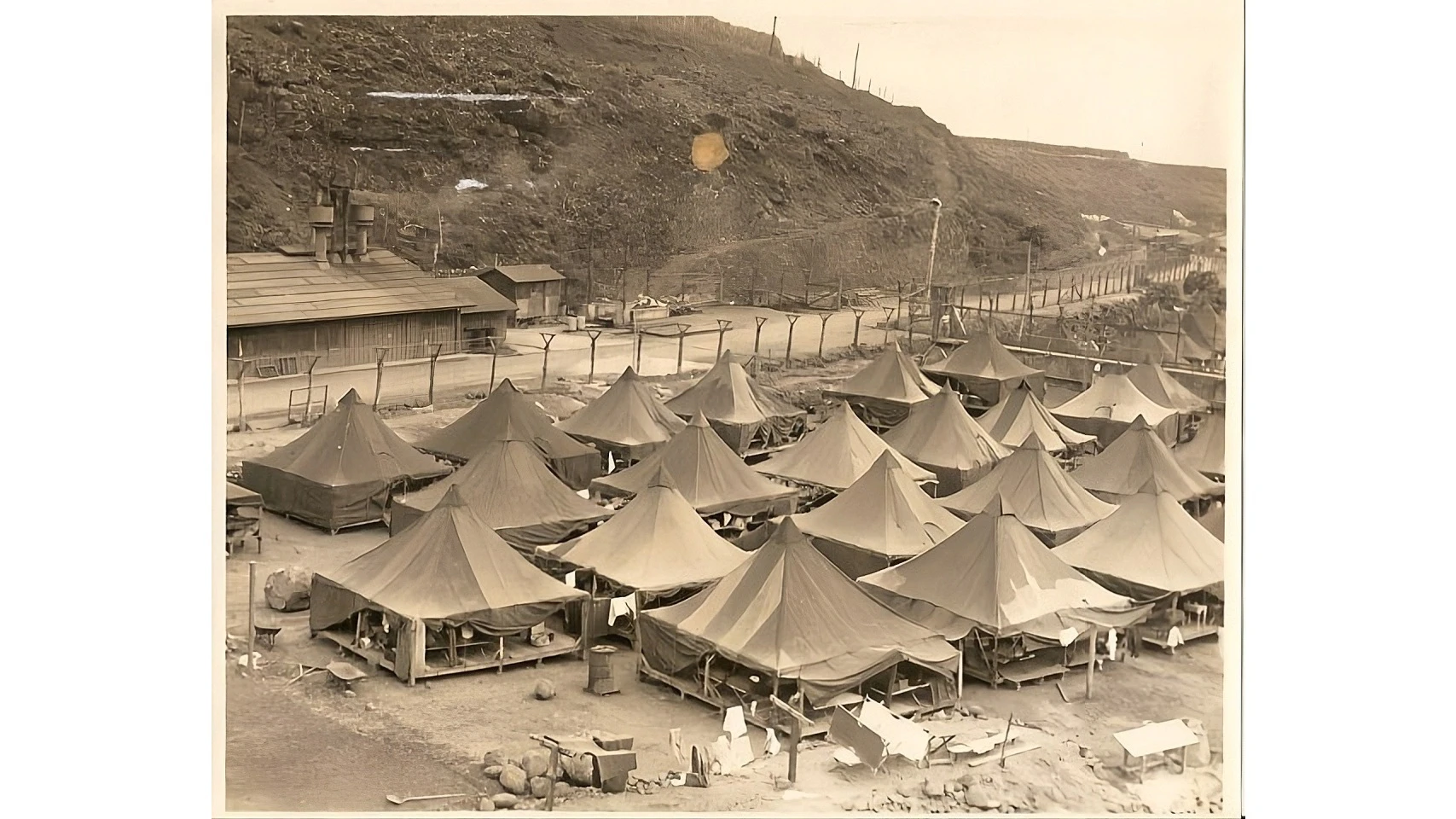
Honouliuli National Historic Site is near Waipahu on the island of O‘ahu and is the location of the Honouliuli Internment Camp, Hawaiʻi's largest and longest-operating Japanese internment camp, which opened in 1943 and closed in 1946.
The internment camp held 320 internees. In Hawai‘i, where more than 150,000 Japanese Americans comprised more than one-third of the territory's population, only 1,200 to 1,800 were incarcerated. The site also became the largest prisoner of war camp in Hawaiʻi with nearly 4,000 individuals being held. Of the 17 sites that were associated with the history of internment in Hawaiʻi during World War II, the camp was the only one built specifically for prolonged detention.
Hundreds of Germans and Italians and other nationalities were also arrested and detained for months at a detention facility on Sand Island. Among them, Austrian-born architect Alfred Preis, who would go on to design the USS Arizona Memorial itself.
The attack on Pearl Harbor was an attack on the United States. However, Hawai‘i was a territory, so authoritative control of the Islands was bestowed upon the U.S. military immediately via martial law. This facilitated unilateral authority with demands of unquestioned compliance. Severe consequences were meted out if deigned necessary.
I want to make clear that the inhumanity demonstrated by Nazi Germany and other Axis nations are mostly proprietary to them although the actions of others are indefensible as well. The same level of abject violence, death and more associated with Axis concentration camps were not elements that dominated Honouliuli.
But it was still an egregious set of actions taken against Japanese American citizens and residents of Hawai‘i.
Those actions were founded in the combination of racial prejudice and basic fear.
The logic employed was simple.
The Japanese attacked us. You are or look Japanese. You are now the enemy, and you'll be treated as such.
That treatment of Japanese American citizens included the rounding up and arresting those who may have had some status in the community. The presence of Japanese plantation workers along with immigration and, yes, naturalization, of Japanese over generations drove the Japanese American population into the 30% to 40% range. Imprisoning that vast number was logistically and financially impossible. Selective apprehensions took place and rarely entire families.
Let's not forget that individuals were separated from families, were corralled into makeshift prisons, were denied basic rights including due process, arbitrarily suffered public humiliation in a culture that holds honor as the definition of character, loss of income, revenue and assets with no knowledge or assurances of even surviving.
These people, these families, were wronged.
In affirmation of this important statement, there were two post-war governmental efforts to clarify said wrongs, to offer redress and provide compensation.
On August 2, 1979, Hawai‘i Senators Daniel Inouye and Spark Matsunaga introduced Senate bill 1647 to establish the Commission on Wartime Relocation and Internment of Civilians (CWRIC). In 1980, Congress passed and President Jimmy Carter signed that bill into law. The CWRIC gathered archival sources, scholarship, and personal papers that explained the government’s decision and process for incarceration. On February 24, 1983, the CWRIC issued its report Personal Justice Denied. It concluded that Executive Order 9066 “was not justified by military necessity, and the decisions which followed — detention, ending detention and ending exclusion—were not driven by analysis of military conditions. The broad historical causes which shaped these decisions were race prejudice, war hysteria, and failure of political leadership.”
The Civil Liberties Act of 1988 was signed into law on August 10, 1988, and implemented the recommendations of the CWRIC. Throughout his time in office, Senator Matsunaga supported civil rights for Asian Americans and was the primary advocate for the Civil Liberties Act. According to Leslie T. Hatamiya in Righting a Wrong: Japanese Americans and the Passage of the Civil Liberties Act of 1988, “Matsunaga’s efforts cannot be overemphasized.”
And signing The Civil Liberties Act of 1988 into law was President Ronald Reagan.
These legislative efforts do not exonerate the United States government of actions during World War II. But it is legal and public admission of wrongs committed and a small restoration of losses suffered by those who were innocent.
This is the 80th anniversary of the closure of Honouliuli.
I would recommend the following:
- There is a myriad of commemorative events, performances and more highlighting this auspicious time. I would go to www.nps.gov/hono This is the official site of the National Park Service which along with dedicated partners is the focal point for news, information, scheduled events and more.
- I had a wonderful conversation with Christine Ogura, Superintendent, Honoulili National Historic Site, National Park Service and Rich Meiers, Communication Coordinator, Bayer Hawai‘i. The segment is "Sustaining Hawai‘i presented by Bayer" and is found on www.KHVHRadio.com/RickHamada. You will learn more details regarding the role of Bayer Hawai‘i and this 80th anniversary on the posted podcast.
- Listen to iHeartRadio stations including KSSK, Island 985, KUBT-FM, Pop1019, KHVH and others on Sunday, June 28, on "Community Matters" at 7 a.m. Christine and Rich will be the featured guests. Aloha.
Rick Hamada can be reached at rickhamada@aol.com.
For the latest news of Hawai‘i, sign up here for our free Daily Edition newsletter.


