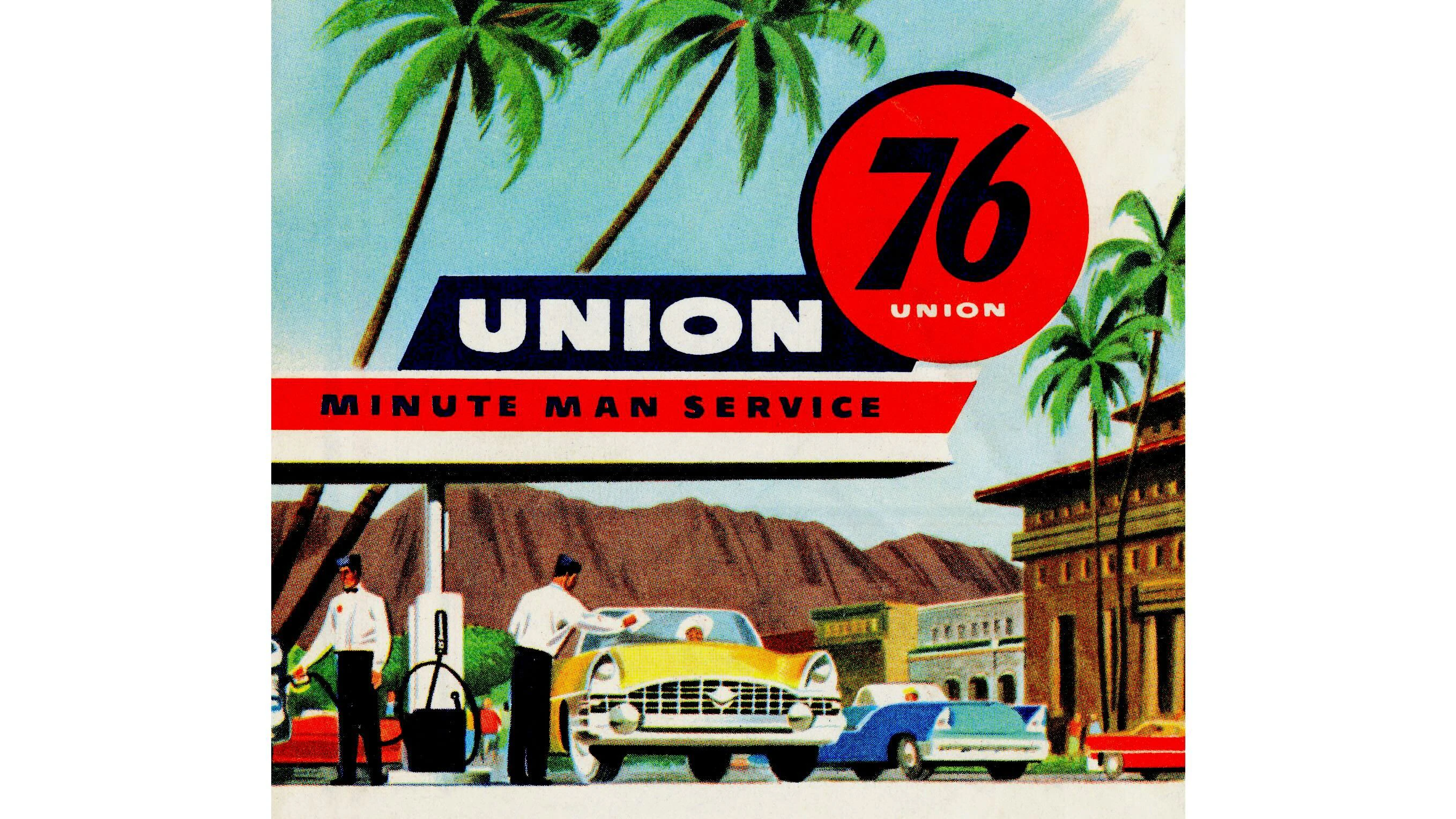
Aloha Tower has reached the venerable age of 100 years. It no longer is a focal point of the city of Honolulu, but it was once. And in fact that was what it was intentionally built to be.
As early as 1915 it was recognized that Honolulu Harbor was in need of improvements. The mix of miscellaneous docks, some covered by warehouses while others were completely open, was inefficient and often unsightly. Many business people also understood the desirability of adding a distinctive, prominent structure to the harbor to catch the attention of the increasing numbers of leisure visitors to Hawai‘i. Such a building would serve as a recognizable landmark that could be publicized in both print and in photographs. This idea would come true as Aloha Tower.
By the early 1920s, construction began on the complex of Piers 8, 9, and 10 and by the time Aloha Tower's base was being prepared in 1925, a debate occurred over the planned height of the tower. Two reasons were put forth to increase it; first, because the nearby Hawaiian Electric power plant erected a second smokestack of 214 feet which it was feared would overshadow the tower, and second, the clock faces on the tower were too low to be seen from a distance. For a time an increase of 36 feet, or three stories, was actively pushed. In the end, however, only 12 feet was authorized, making the finished Aloha Tower 185 feet and 6 inches tall; with its spire included it surpassed 200 feet. It was the highest building in the Hawaiian Islands.

At the end of May 1926, Piers 8, 9, and 10, along with Aloha Tower, were declared complete. For a cost of $165,000, Honolulu now could boast of a building of 12 stories served by an electric elevator and containing a 7-ton time-keeping mechanism on the 10th floor that ran four separate clock faces, one on each side of the tower. On the 11th floor, above the clocks, were four separate viewing balconies for the public to marvel at the scenes of downtown Honolulu, the busy harbor and the natural beauties of the sky, the sea, and the Ko‘olau Mountains. Offices on the remaining floors were available on the rental market for commercial tenants. A flashing light at the top made the tower visible to ships far offshore at night, and a built-in siren was sounded from it at 7 a.m., one minute before 12 noon, and 4 p.m. to signal important times in the usual workday. (Later, for decades, the siren was switched to a single 8 p.m. sounding to designate a curfew for everyone under the age of 16.)

This grand new addition to Honolulu Harbor was made more attractive by the addition of Irwin Park on its mauka side, which was made possible by the demolition of other now-outmoded buildings nearby.
The parcel of 24,308 square feet of land for this green space was donated on November 7, 1930 by Helene Irwin Fagan in memory of her father, William G. Irwin, and initially was covered just by grass, shrubs and trees. But, not surprisingly, the congestion of motor vehicles that occurred every time a large passenger ship arrived or departed required the addition of space for parking, and in June 1939 Fagan gave permission for this to be placed in the park. It's still there today.


"Boat Days" were important, when big ocean liners arrived at, or departed from, Honolulu Harbor. Not only would cargo be unloaded and loaded, more importantly for the growing tourist industry, passengers would be coming or going. Usually scores of visitors would be getting off to begin vacations that usually lasted at least a few weeks, since the cost of a Hawai‘i trip was high enough that most travelers at this time were wealthy. Others on around-the-world trips would be hurried into luxury taxis or tour vehicles for sightseeing on O‘ahu along with a stop for lunch, before their vessel would depart in the late afternoon that same day. All this led to hustle & bustle at the docks, with a large and colorful part of the activity being the lei sellers who lined the sidewalks in hopes of selling all the lei that they held up. The competition could sometimes be aggressive since there was only a short period to earn income before the crowds of customers dispersed.

Originally, back in 1926, Aloha Tower and its piers had been made noticeable by a paint job of 1,900 gallons of "Egg-Shell Mill White" paint. Making the structure easy to see from offshore was the entire point of its construction, so that people on ships could spot it as they approached. But with the sudden and shocking arrival of World War II on December 7, 1941, abruptly the opposite tactic was necessary.
Japanese submarines actually were patrolling around and among the Hawaiian Islands in the first months of the war, and should one of these surface during the night, the view through a periscope of the light-colored dock buildings and the tower itself (even with a blackout of electric lighting) could lead to catastrophe if torpedoes were launched towards them. To make these (and many other important buildings) less easy to see by the enemy, camouflage paint jobs were quickly applied. The wavy outlines of brown, green and grey paint would, it was hoped, disguise sharp edges and reduce the contrast of buildings against the mountain slopes behind them.
This distinctive wartime paint job was officially made obsolete by the surrender of Japan in August 1945 which ended the war, but getting things back to normal didn't happen overnight. In fact it wasn't till April 29, 1947 that sandblasting off the camouflage colors and re-applying a light paint surface began.
The tower's makai side, the first to be finished, was completed on May 8th but work was still going on in September of that year. The entire renovation back to prewar conditions wasn't completed until the observation decks on the 11th floor were finally reopened to the public on January 1, 1948.
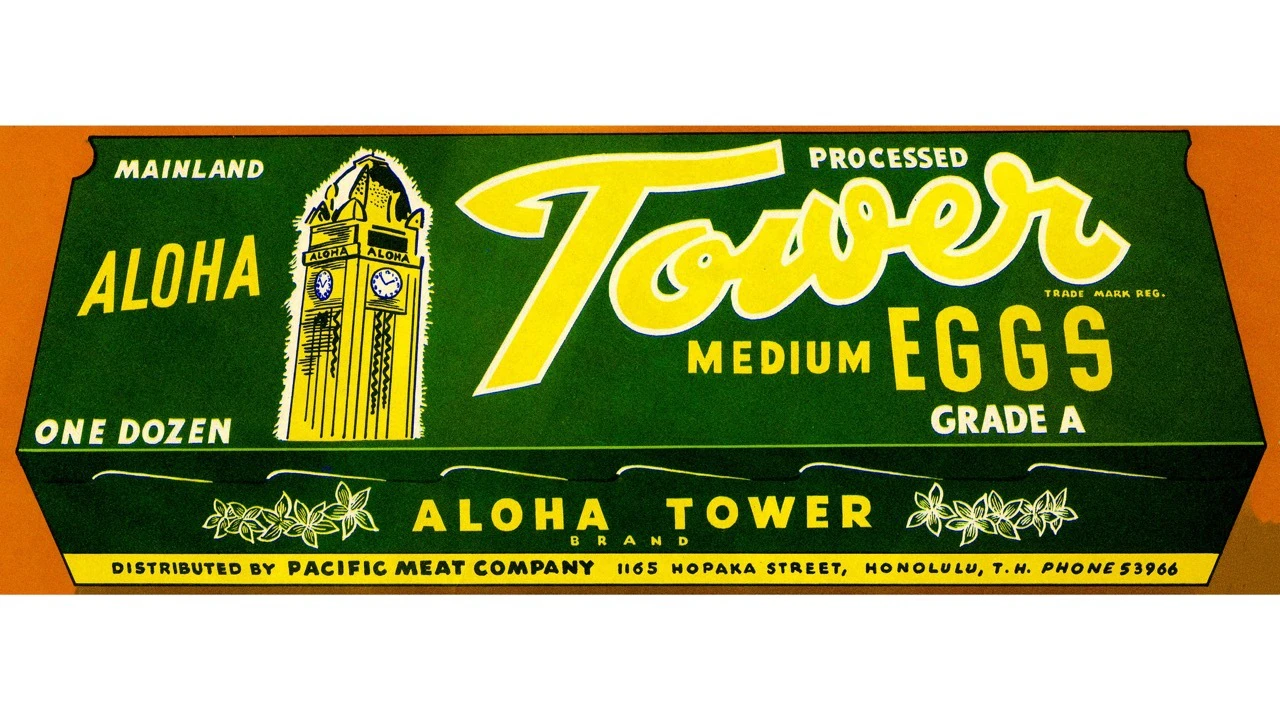
The success of Aloha Tower as an identifiable symbol of Hawai‘i can be seen by how often it was shown in advertising and other commercial illustrations, particularly in the 1930s. It was not just what tourists saw on their ocean arrivals and departures; more importantly, as a tall modern structure it implied that the Hawaiian Islands were up-to-date and economically advanced.


Next week, watch for the continued story of Aloha Tower and its two major redevelopment projects that both seemed like good ideas at the time, but which unfortunately didn't succeed.
(Click here to continue to Part 2)
For the latest news of Hawai‘i, sign up here for our free Daily Edition newsletter.